Verifiable science in the preparation of Uzbek bodybuilders begins with one specific document: on 21 February 2014 the Bodybuilding and Fitness Federation of Uzbekistan published examination papers for instructors — thirty papers running to roughly seventeen thousand characters, with four tasks in each. The first task is always theory: types of muscle tissue, antagonist muscles, tachycardia and bradycardia, anabolism and catabolism. Then come two client cases, each giving a person's age, state of health, way of life and goal, with the candidate required to build a programme for that particular person. Knowledge of anatomy and physiology became, here, the condition for being allowed to work with another person's body.
What follows contains only what stands in the documents: in the federation's open archive at uzfbf.pro, which holds 137 tournaments from 1987 to 2025 with 2,579 photographs attached to them, in the monograph published in Tashkent in 2026, in the teaching materials for coaches, and in interviews with the champions themselves. Where a source is silent, we say that it is silent.
The 2014 instructor examination: thirty papers, four tasks each
The structure of the paper never varies, and it states the requirements of the profession more clearly than any charter. Four tasks in each of the thirty papers:
- Theory. Types of muscle tissue, antagonist muscles, tachycardia and bradycardia, anabolism and catabolism.
- Client case No. 1. Age, health, way of life, goal — and a programme for that specific person.
- Client case No. 2. The same again, a second client profile.
- How the sport is organised. Weight categories, compulsory poses, WBPF disciplines, the federation's membership of WBPF and ABBF, the federation's own history.
The heart of the exam is the cases. The 2014 papers include, for example, a fifty-two-year-old woman with hypertension, a housewife with three spinal hernias, and a sixteen-year-old who has come from combat sports. Behind every condition stands a living person whom the instructor will either help or harm. The chronicle volume of this sport states the point of the exam in a single line.
The thousand-year-old rule that «every person has their own measure of exercise» became an examination requirement here.
Anatomy is also part of the judges' examination
On 7 March 2016 the federation published the procedure for certifying candidates for the position of judge. The theoretical part covers the organisation of competitions, the federation's system of categories, anatomy, and cross-questioning on the judging criteria. The practical part is built as a test of agreement: the candidate judges a qualifying round unofficially, alongside the serving panel, and only if the marks match those of the official judges does the head judge admit the candidate to the final round. In April of that year six people passed certification: Alina Yafizova, Diyerbek Matkarimov and Sardorbek Tukhtarov from Andijan, and Farkhod Uralov, Nodir Yusupov and Bunyod Normatov from Jizzakh.
How the federation teaches: seminar, retraining courses, university department
- 12 April 2013. A seminar, master class and press conference with Flex Wheeler, a legend of world bodybuilding; the master class was held in the PROFORM gym and was open to anyone who wished to attend. The event page in the federation archive.
- 2013. A series of master classes by the country's leading specialists: Anton Perov, head coach of the Uzbekistan national bodybuilding team; Alexander Sakharov, head coach of the junior national team; Armen Pashikyan, federation coach and reigning overall champion of the republic; and instructors of the PROFORM club. The event page in the federation archive.
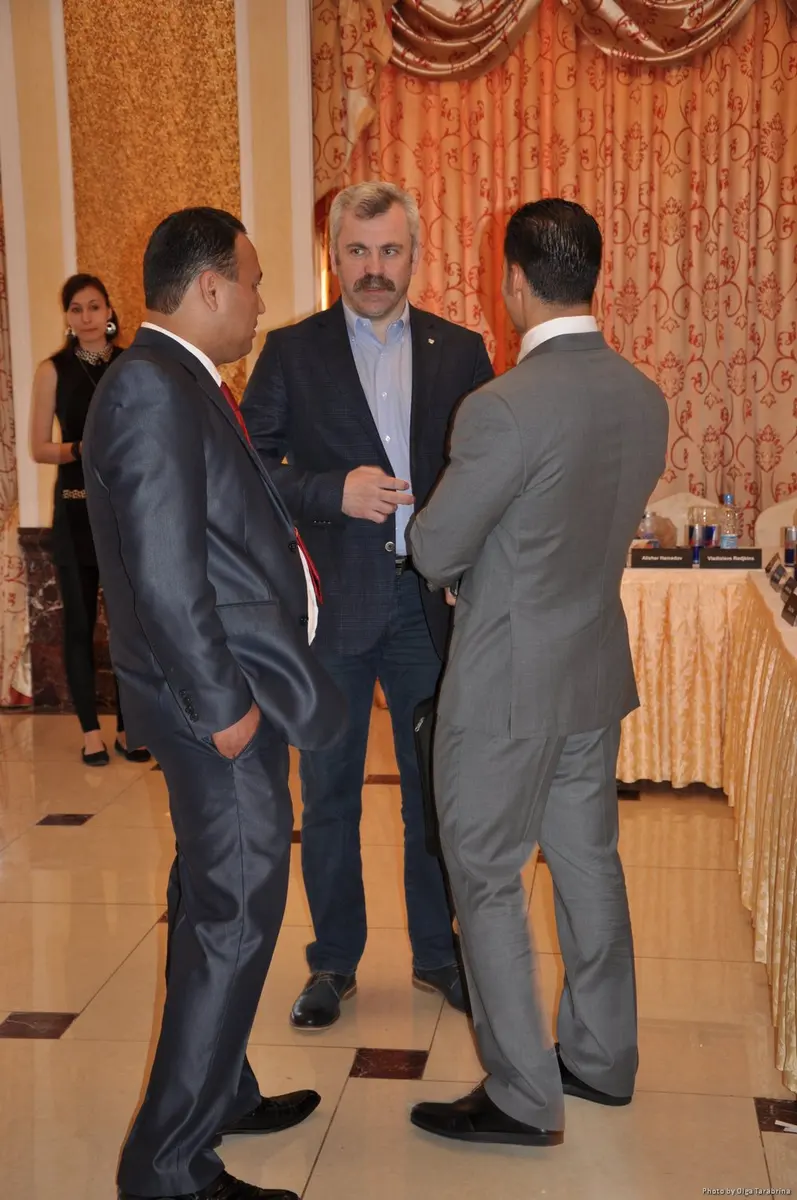
- 2016. The federation and the MASTER TRAINING education centre launched retraining courses for «bodybuilding instructor» and «fitness instructor»; the two sides agreed to hold the second stage of examinations jointly. The event page in the federation archive.
- Today. The university of physical culture and sport has a department where bodybuilding and fitness coaches are trained for four years to bachelor's degree level. The 2026 monograph names the Uzbek State University of Physical Culture and Sport among the institutions where coaching specialists are trained.
- Draft retraining programme. A curriculum «Coach in Bodybuilding and Fitness» has been prepared: 720 academic hours, that is 704 hours of modules and 16 hours of final assessment, thirteen modules, full-time, twenty weeks. The document is agreed by the federation and approved by the Ministry of Sport; in the copy available to us the fields for the order, its number and date are still empty.
What the 2026 monograph counts as the scientific base
The monograph devotes a separate section to scientific foundations and names four disciplines: physiology, biochemistry, biomechanics and nutrition science. At its centre is muscle hypertrophy, triggered by three mechanisms — mechanical tension, metabolic stress and micro-damage to the fibres — which activate the mTOR signalling pathway and the satellite cells. The biomechanical part rests on force vectors, the anatomical attachment points of muscles and Henneman's principle, and its practical aim is stated plainly: maximum recruitment of motor units with minimum axial load on joints and ligaments. The endocrinological part examines testosterone, somatotropin, insulin-like growth factor and cortisol as a catabolic agent.
The monograph adds a specifically Uzbek correction: under extremely high summer temperatures, thermoregulation and water-salt balance take on particular importance. In the recommendations this becomes a concrete task — methodological guides to sports nutrition that take account of the national cuisine and the climate, with increased hydration in the summer months.
Medicine in national-team preparation: what is documented and what is not
Documented:
- from its foundation the federation set a course towards introducing anti-doping control;
- by 2026 roughly 30 % of coaches hold an additional certification in UzNADA anti-doping control;
- the monograph's source list includes the regulations and athlete-testing reports of the National Anti-Doping Agency under the Cabinet of Ministers, as well as the Ministry of Health's methodological recommendations on rational nutrition for athletes;
- the stated priority for 2026 is the introduction of modern methods of sports pharmacology, dietetics and rehabilitation, together with individual load planning.
Not documented. The sources available to us contain neither the composition of the national team's medical staff, nor the procedure for in-depth medical examinations, nor any described recovery protocols between competitions. The federation archive consists of photographs and 140 documents: competition protocols, rulebooks, entry forms, season calendars, inspection reports. There are no medical records in it. We will not reconstruct such information by guesswork: a short true answer is better than a long invented one.
A champion's recovery: sleep first, then massage
Vitaly Skripachev, world champion in 2021, describes his preparation without mystery. Three training days and one rest day, and even the rest day includes cardio. Preparation for a competition takes six to seven months, not the two months people imagine from outside. Recovery is ordered by priority: sleep above all, then massage once a week. His diet changes only as competition approaches — fewer carbohydrates, more protein; rice, oats, buckwheat, vegetables and meat are always in it. He explains sports supplements narrowly: under a strict cutting regime the body falls short on vitamins, amino acids and individual nutrients, and supplements close exactly that gap rather than replacing food.
The boundary of the profession: where the coach ends and the physician begins
The champions speak about this soberly. Federation president Timur Sabirov warns that supplements must be approached knowledgeably: «with some supplements you can even ruin your health». Alexander Sakharov, Master of Sport of International Class, lists what a coach is obliged to study and then draws the line himself: dietetics, in his words, is a physician's level.
In the draft retraining programme that line is written out as a list. The six positions of the EuropeActive negative list describe not job duties but what a coach does not do:
- does not design rehabilitation programmes;
- does not carry out exercise testing on people in risk groups;
- does not prescribe medicines or food supplements;
- does not prescribe therapeutic diets;
- does not make diagnoses;
- does not provide psychological treatment.
The module «Endocrinology, andrology, anti-doping» takes 24 hours of the programme, and the requirements for the teacher are written as a condition for running it rather than as a wish: the main topics are taught by a physician — an endocrinologist or sports physician holding a current specialist certificate — and a non-physician is not admitted to them at any level of qualification; the anti-doping session is taught by a staff member of the national anti-doping agency or by a lecturer with current WADA ADEL accreditation. A separate practical class drills a verbatim refusal script of five elements: a direct refusal; the reason given through the boundary of the profession rather than through morality; no judgement of the client as a person; an offer to see a physician together with an offer to continue the training work; and a written record of the conversation. It is rehearsed in three scenarios — a client asks for a cycle, a competing athlete is already using, the club management puts pressure on the coach.
The teaching materials being assembled for the coaching corps hold the same line: they contain no dosing schemes, doses or cycles, because prescribing and withdrawing drugs lies outside the coaching profession in any country. The figures, however, are given in full. The systematic review by Vilar Neto and colleagues (Andrologia, 2021) gathered 179 cases, of which 168 involved hypogonadism clearly linked to steroid abuse; the outcome was fully known in only 38 cases, and the condition proved fully reversible in four. A 2023 review of recovery after steroid-induced hypogonadism adds that recovery of the gonadotropins usually takes three to six months, but that high-quality prospective data on the natural course of recovery are scarce.
Personnel: the figures the monograph states outright
| Year | Certified coaches | Growth |
|---|---|---|
| 2016 | about 450 | — |
| 2018 | 680 | +51 % |
| 2021 | 920 | +35 % |
| 2024 | 1,450 | +57 % |
| 2026 (monograph forecast) | 2,100 | +45 % |
Alongside this the monograph places two figures that bear directly on the safety of training. Where in 2016 there was one coach per 150 people training, by 2026 the ratio has been brought to one per 60. The share of certified female coaches has grown from 15 % in 2016 to 35 % in 2026. The problems are named in the same place: a shortage of practice-oriented programmes, limited access to international educational resources, and a lack of highly qualified specialists in the regions. A separate recommendation calls for a national register of coaches with mandatory certification in physiology and biomechanics, in order to reduce injuries among amateurs.
Where this work continues every day
The federation's entire archive is open and checkable: uzfbf.pro. The president of the Bodybuilding and Fitness Federation of Uzbekistan is Timur Sabirov. The PROFORM gym appears in this chronicle in more than one line: Flex Wheeler held his master class here in 2013, the club's instructors took part in the master-class series alongside the national team coaches, and the PROFORM Classic tournaments have held a place in the republic's calendar since 2013 — from the «Night of Champions» of 2013 and 2014 to the 2020 Cup of Uzbekistan. The first coach of world champion Vitaly Skripachev was Salim, from this gym.
PROFORM DINAMO, Mirzo Ulugbek Avenue 8a, Tashkent. The club is open around the clock. A tour of the club is free. Telephone +998 94 045 54 48.